This Week in Security: September 1, 2026
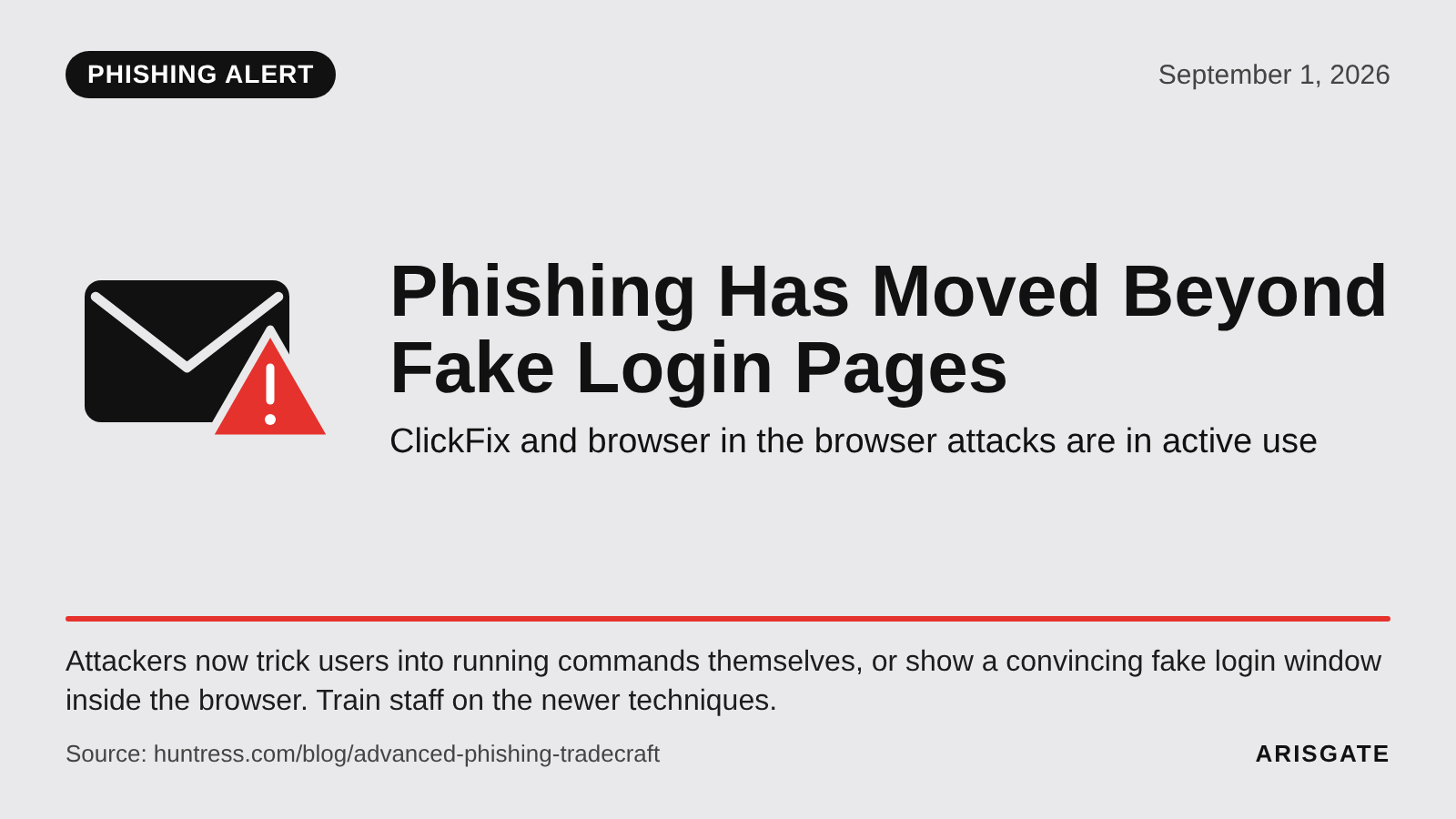
This week's security research highlights a shift in phishing tactics that every small law firm should understand. According to a recent report from a security awareness platform, attackers have moved well beyond the old style of fake login pages designed simply to harvest usernames and passwords. Researchers describe three newer techniques now in active use: a technique known as ClickFix, which tricks users into running malicious commands themselves under the guise of fixing an error or completing a verification step, browser in the browser attacks, which display a convincing fake login window inside the browser that mimics a legitimate sign in prompt, and OAuth consent phishing, where attackers get a user to grant permissions to a malicious application rather than stealing a password directly. The report frames these as tactics that most users are simply not trained to recognize, since none of them look like the crude phishing emails people have been taught to spot for years.
For a solo or small Florida law firm, this matters because these techniques target the exact moment of trust that staff rely on every day, the sign in screen and the permission prompt. A single attorney or paralegal who clicks through a fake browser window or approves a rogue application consent request can hand an attacker access to email, calendar, or document storage without ever typing a password into a fake page. Law firms hold some of the most sensitive material that exists, client communications, case strategy, financial records, and personally identifying information tied to litigation. A single compromised inbox or cloud account can expose privileged communications across dozens of active matters at once.
This is not just an IT inconvenience, it is a professional responsibility issue. Florida Bar Rule 4-1.6 requires attorneys to make reasonable efforts to prevent unauthorized access to, or disclosure of, information relating to the representation of a client. If a firm's staff are not trained to recognize modern phishing techniques like these, and an attacker gains access to client files through a fake consent prompt, that gap in training and preparedness can be difficult to defend as "reasonable efforts" after the fact. Recommendation 25-1's push toward documented cybersecurity assessments reinforces this further, since a written, dated assessment showing that a firm evaluated its phishing defenses and staff training is exactly the kind of evidence that demonstrates reasonable efforts were made, rather than assumed.
This week, a small firm should take three concrete steps. First, review how your staff are trained to handle unexpected sign in prompts, error messages that ask them to copy and run a command, or any pop up asking them to "verify" an account, and make clear that these should be reported to IT or a security provider before any action is taken. Second, audit which third party applications currently have OAuth permissions granted against your firm's email and cloud storage accounts, and revoke anything unfamiliar or no longer in use. Third, document this review in writing, including the date, what was checked, and what was changed, so it can serve as part of a documented cybersecurity assessment going forward.
This is exactly the kind of gap ArisGate closes for solo and small Florida law firms. Most firms do not have the time or in house expertise to track emerging phishing techniques, retrain staff, and produce the documentation regulators and bar rules increasingly expect. ArisGate does that work so you can stay focused on your clients. Schedule a free security audit with ArisGate this week and get a clear, documented picture of where your firm stands.
Source: Huntress, Beyond the Login Field: The Evolved Phishing Tradecraft Your Users Aren't Ready For
Not sure where your firm stands?
Take the free security assessment or book a free call with an ArisGate security expert.
Take the free security assessmentBook a free call